
Common pet brushing mistakes are errors in technique, tool choice, or routine that directly damage your pet’s coat, irritate their skin, and turn grooming into a stressful experience for both of you. Most owners brush their pets with good intentions but unknowingly cause matting, skin inflammation, or behavioral resistance by skipping a few fundamentals. The right tools, including slicker brushes, undercoat rakes, and metal combs, paired with the right technique, make brushing a genuinely calming ritual. This guide covers the most frequent grooming errors and exactly how to fix them.
1. common pet brushing mistakes start with the wrong brush
Choosing the wrong brush is the single most damaging grooming error you can make. Matching brush type to coat type outweighs technique in ensuring grooming comfort and coat health. A rubber curry brush works for short-haired dogs and cats. A slicker brush handles long, flowing coats. An undercoat rake is built for double-coated breeds like Huskies or Golden Retrievers. A pin brush works for finishing and fluffing after detangling.
Using the wrong tool wastes time and causes real discomfort. A slicker brush dragged across a short-haired cat’s coat, for example, scratches the skin without removing much hair at all.
| Brush Type | Best Coat | Benefit | Risk If Misused |
|---|---|---|---|
| Rubber Curry Brush | Short hair | Removes loose hair gently | Ineffective on long coats |
| Slicker Brush | Long, wavy hair | Detangles and smooths | Scratches sensitive short-coat skin |
| Undercoat Rake | Double coats | Removes dense undercoat | Pulls skin on thin-coated breeds |
| Pin Brush | Medium to long | Finishing and fluffing | Misses mats on thick coats |
| Metal Comb | All coat types | Checks for hidden tangles | Can snag if used with force |
Pro Tip: Brush the inside of your own forearm with the tool before using it on your pet. If it feels sharp or scratchy on your skin, it is too harsh for your pet’s skin.
2. brushing too hard and ignoring pain signals
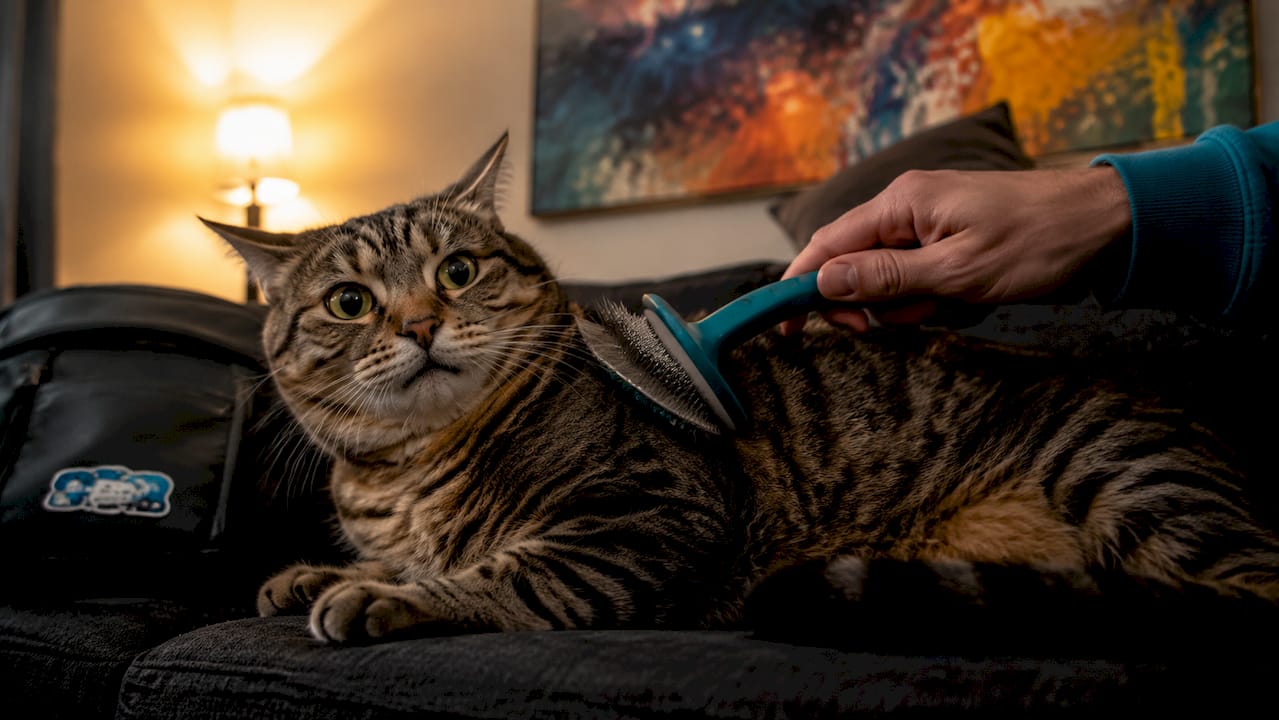
Applying too much pressure during brushing causes pain, skin damage, and lasting negative associations with grooming. Pets do not always yelp when something hurts. Instead, they show subtler signals that most owners miss entirely.
Watch for these warning signs during every session:
- Stiffening of the body signals the pet is bracing against discomfort
- Skin twitching or rippling is the rolling skin reflex, which indicates overstimulation or pain in that area
- Turning to look at the brush means the pet is tracking the source of discomfort
- Pulling away or moving off is a clear request to stop
- Flattened ears or tucked tail in dogs signals stress, not playfulness
Owners often mistake skin twitching as a playful reaction. It is not. That reflex means the session should pause immediately to avoid building a negative association with grooming.
Use light to medium pressure and let the brush do the work. When you hit a knot, work it loose gradually from the tip toward the root. Never drag the brush through a tangle with force.
Pro Tip: Stop the moment the brush pulls or your pet reacts. Forcing through resistance causes pain and makes the next session harder.
3. getting the brushing frequency wrong
Brushing too rarely creates mats, traps moisture, and sets up conditions for skin infections. Brushing too often in long sessions causes irritation and stress. Veterinary grooming standards recommend daily brushing for long-haired breeds and weekly brushing for short-haired breeds to maintain skin health.
Short, consistent sessions outperform long, infrequent ones every time. Experts recommend spending 20–30 seconds per palm-sized section to cover the coat thoroughly without rushing or fatiguing your pet.
| Coat Type | Recommended Frequency | Session Length | Shedding Season Adjustment |
|---|---|---|---|
| Long hair (e.g., Persian, Collie) | Daily | 10–15 minutes | Add undercoat rake daily |
| Medium hair (e.g., Spaniel, Ragdoll) | Every 2–3 days | 5–10 minutes | Increase to daily |
| Short hair (e.g., Beagle, Domestic Shorthair) | Weekly | 3–5 minutes | Every 2–3 days |
| Double coat (e.g., Husky, Malamute) | 3–4 times per week | 10–20 minutes | Daily de-shedding rake sessions |
Infrequent brushing does more than create mats. Mats trap moisture and bacteria, raising the risk of hot spots and fungal infections under the coat where you cannot see them.
Pro Tip: Break grooming into timed sections of two to three minutes per body zone. Shorter sessions reduce stress and keep your pet cooperative over time.
4. surface brushing that misses hidden mats
Surface brushing is one of the most common brushing technique errors, and it is invisible until the damage is done. When you only brush the top layer of the coat, tangles packed against the skin continue to tighten and worsen. Surface brushing misses tangles packed against the skin, and a metal comb run through the coat afterward is the most reliable way to check whether the coat is actually detangled.
The correct method is line brushing. Part the coat into sections, then brush from the skin outward to the tip. Work in rows, moving systematically across the body. This approach covers every layer of the coat, not just the surface.
Several areas get skipped most often:
- Behind the ears where friction from collars and head movement creates tight knots
- Under the collar where constant contact mats the fur quickly
- Armpits and groin where leg movement causes constant rubbing
- Base of the tail where oils and debris accumulate
- Belly and chest which many pets guard as sensitive zones
For small tangles, apply a detangling spray and work through them with a grooming comb before reaching for the brush. Trying to brush through a dry knot pulls the skin and causes pain.
Pro Tip: After brushing, run a metal comb through the entire coat. If the comb catches anywhere, that section needs more work before you finish.
5. brushing in the wrong direction
Brushing against the natural direction of coat growth is a frequent mistake in pet brushing that causes discomfort and breaks the coat. Hair grows in a specific direction on every part of the body, and brushing against it pulls at the follicles rather than smoothing them.
Always brush in the direction the coat naturally lies. On most dogs and cats, this means brushing from the neck toward the tail along the back, and downward along the legs. The belly and chest often have hair that grows in different directions, so follow the coat’s natural pattern rather than assuming one direction covers everything.
Brushing against the grain does have one legitimate use: loosening a very dense undercoat before a bath. Even then, follow up immediately by brushing with the grain to smooth the coat back down. Leaving the coat brushed against the grain causes tangling.
6. brushing a wet coat
Brushing a wet coat is a mistake that damages the hair shaft and tightens any existing tangles. Water swells the hair fiber, making it more fragile and prone to breakage under brush pressure. Tangles that were manageable when dry become locked in place once wet.
Brush before bathing, not after. Removing loose hair and working out tangles before the bath prevents water from tightening those knots into mats that require cutting to remove. After a bath, let the coat air dry or use a low-heat dryer before picking up the brush again.
The only exception is a detangling spray applied to a slightly damp coat to help loosen a stubborn knot. Even then, use a wide-tooth comb rather than a brush, and work gently from the tip toward the root.
7. using human shampoo before or after brushing sessions
Human shampoo causes a skin pH imbalance in pets, leading to dryness, itching, and inflammation. Human skin sits at a pH of around 5.5. Dog and cat skin sits closer to 7.0. A shampoo formulated for human skin strips the natural lipid barrier from pet skin, leaving it dry and vulnerable to irritation.
This matters for brushing because dry, irritated skin makes every grooming session more uncomfortable. Pets with compromised skin react more strongly to brush pressure, making them harder to groom over time. Always use a pet-specific shampoo that maintains the natural skin lipid balance.
8. skipping sensitive areas entirely
Many owners avoid brushing the belly, paws, ears, and groin because their pet resists. Skipping these areas does not solve the problem. It guarantees those spots become the worst matted zones on the body.
Introduce sensitive areas gradually. Touch the area with your hand first, then introduce the brush for just a few seconds, then reward with a treat. Build tolerance over multiple sessions rather than forcing a full groom in one go. A grooming glove works well for sensitive areas because it mimics the feel of a hand rather than a tool.
Paws need particular attention during shedding season. Hair between the paw pads mats quickly and can cause the pet to walk awkwardly or lick the area obsessively.
9. turning grooming into a negative experience
Rushing through brushing, restraining a struggling pet, or pushing through resistance creates a pet that dreads every grooming session. That dread compounds over time. A dog or cat that associates brushing with stress will resist earlier and more intensely at each session.
Keep sessions short and positive. Offer treats before, during, and after. End every session on a calm note, even if you did not finish the full coat. A partial, positive session is more valuable than a complete, stressful one. Pair brushing with calm praise and a consistent routine so your pet learns what to expect.
Key takeaways
Avoiding common pet brushing mistakes requires matching the right tool to the coat type, using gentle pressure, and keeping sessions short and consistent.
| Point | Details |
|---|---|
| Match brush to coat type | Use rubber curry for short hair, slicker for long hair, and undercoat rake for double coats. |
| Read your pet’s body signals | Skin twitching or stiffening means stop immediately and reassess pressure or tool. |
| Brush before bathing | Water tightens tangles, so always detangle the coat before any bath. |
| Use line brushing technique | Part the coat in sections and brush from skin to tip to catch hidden mats. |
| Keep sessions short and frequent | Daily short sessions for long coats outperform weekly marathon grooming every time. |
What i’ve learned from watching owners brush their pets
Most grooming problems I see come down to one thing: owners treating brushing like a chore to finish rather than a routine to build. They grab whatever brush is on the shelf, rush through the session, and wonder why their dog bolts when the brush comes out.
The sensitivity test changed how I think about tool selection. Brushing my own forearm with a new tool before using it on a pet sounds almost too simple. But it immediately tells you whether the pins are too sharp or the pressure is too much. Most people skip this step entirely.
The other thing I keep coming back to is how much patience matters in the early sessions with a new pet or a rescue animal. You are not just grooming the coat. You are building trust. A pet that learns grooming is safe and predictable will sit still for a full session within a few weeks. A pet that gets forced through a rough session once may resist for months.
My honest recommendation: if your pet is already mat-heavy or extremely resistant, see a professional groomer first. Let them clear the coat and reset the baseline. Then take over with short, positive sessions at home. Trying to work through severe mats at home without experience causes real pain and sets the relationship back significantly.
— Eric
Upgrade your grooming routine with the right tools
If you have been dealing with pet hair buildup, resistant brushing sessions, or tools that pull more than they smooth, the problem is often the equipment itself. Thegittinspotaccessories carries the Pet Hair Spray Brush, a product that combines a spray function with a brush head to loosen tangles and remove hair without the pulling that makes pets resist grooming. The spray feature keeps the coat lightly damp during brushing, which reduces static and friction on the hair shaft.

Thegittinspotaccessories also offers a self-cleaning brush that removes collected hair with one press, so you spend less time cleaning the tool and more time on your pet. Both products are designed with pet comfort in mind and are priced to make quality grooming accessible at home.
FAQ
What is the most common pet brushing mistake?
Using the wrong brush for the coat type is the most common error. A mismatched tool causes skin irritation, incomplete grooming, and unnecessary discomfort for your pet.
How often should i brush my dog or cat?
Long-haired breeds need daily brushing. Short-haired breeds need weekly sessions. During shedding season, increase frequency for all coat types and add a de-shedding rake for double-coated breeds.
How do i know if i am brushing too hard?
Watch for skin twitching, body stiffening, or your pet turning to look at the brush. The rolling skin reflex is a clear signal to stop and reduce pressure immediately.
Should i brush my pet before or after a bath?
Always brush before bathing. Water tightens tangles, turning manageable knots into mats that are difficult or impossible to brush out after the coat is wet.
How do i check if i have brushed thoroughly enough?
Run a metal comb through the coat after brushing. If the comb catches on any section, that area needs more attention before the session is complete.