
Materials science improves brushes by engineering the physical and chemical properties of bristles, handles, and tufting systems to deliver measurable gains in performance, durability, and hygiene. The field of brush materials engineering, as it is formally known, draws on polymer chemistry, precision extrusion, and advanced manufacturing to produce tools that outperform traditional designs in every measurable way. Advances in synthetic monofilaments like nylon 612, high-temperature vulcanized (HTV) silicone, and non-round bristle profiles are the core drivers behind how materials science improves brushes for grooming, cleaning, and pet care today.
What materials are used in modern brush manufacturing?
The raw material a brush manufacturer chooses determines nearly everything about how that brush performs. Brush material is as important as shape in determining friction, flexibility, and hair engagement. That single fact explains why two brushes that look identical can feel completely different in your hand.
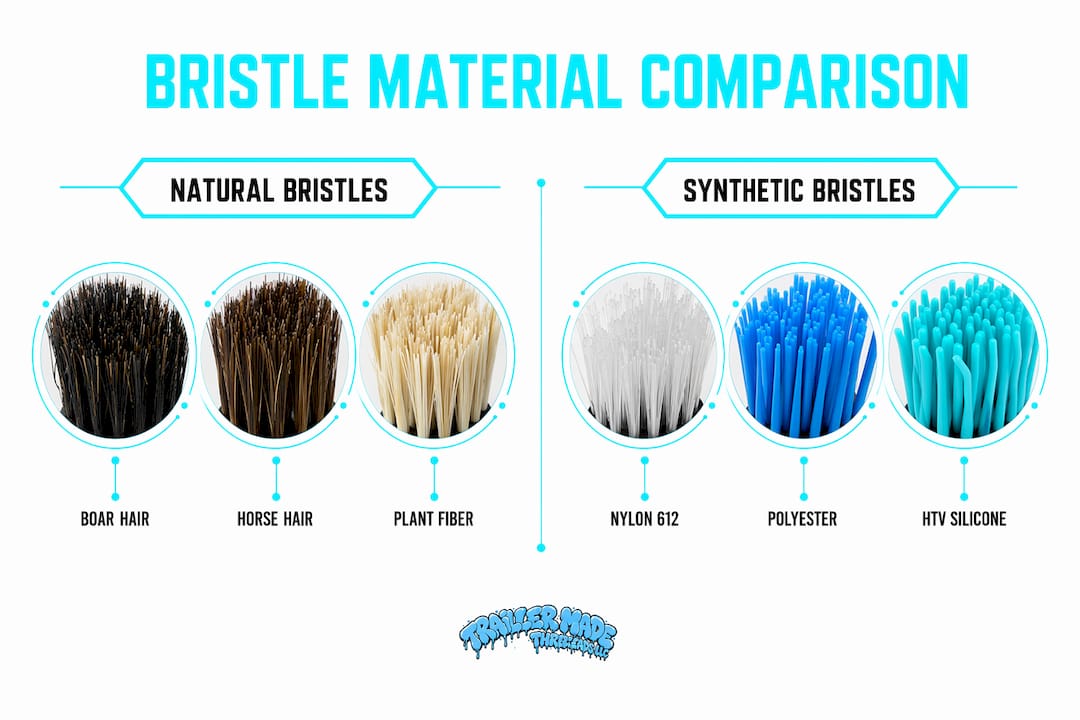
Modern brush production relies on three primary material categories:
- High-performance synthetic monofilaments. Nylon and polyester filaments dominate brush manufacturing because they offer precise diameter control, consistent stiffness, and resistance to moisture. Nylon 612 polymer specifically resists moisture absorption, which prevents bristle softening and melting under high-friction conditions. This makes it the preferred choice for grooming brushes that contact wet coats or skin.
- Natural fibers. Boar bristle, horsehair, and plant-based fibers remain popular for their ability to distribute natural oils along hair shafts. Their limitation is inconsistency. Natural fibers vary in diameter, stiffness, and surface texture from batch to batch, which makes automated manufacturing difficult and quality control expensive.
- Silicone materials. HTV silicone is food-grade, hypoallergenic, and flexible enough to conform to curved surfaces like a pet’s body or a human scalp. Silicone bristles do not harbor bacteria the way porous natural fibers do, which gives them a clear hygiene advantage in grooming applications.
The shift toward synthetic monofilaments is not just about performance. Uniform diameter and surface finish of monofilament yarns are critical for high-speed automated manufacturing. Consistent raw materials reduce machine stoppages and production waste, which lowers cost and improves the reliability of the finished brush.
How does polymer extrusion improve brush bristle performance?
Polymer extrusion is the process that transforms raw plastic pellets into the precise bristle filaments found in modern grooming brushes. The details of how that extrusion happens determine whether a bristle springs back after bending or stays deformed after a single use.
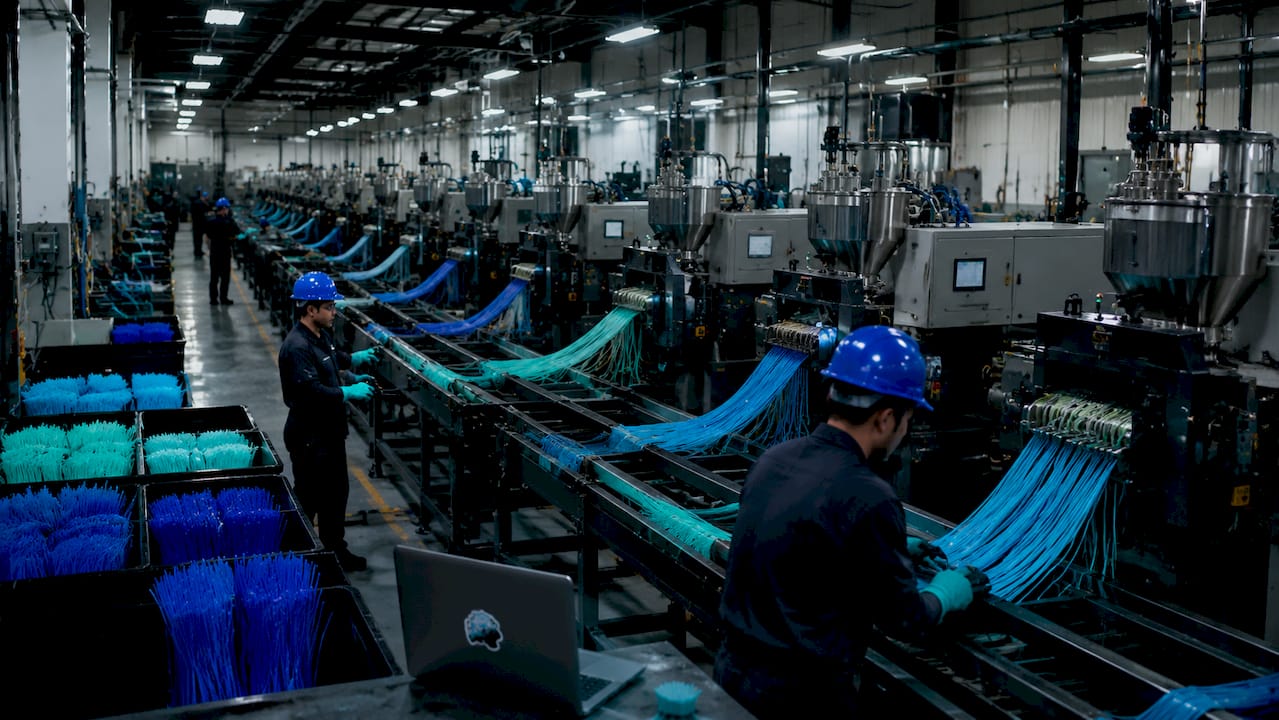
Bristle bend recovery depends on molecular alignment during extrusion. Poor heat setting during this stage causes bristle fraying and premature brush failure. Think of each bristle as a tiny spring. If the molecules inside it are aligned correctly, the spring returns to its original shape after impact. If they are not, the spring collapses and stays flat.
Advanced extrusion technology now enables several performance improvements that were not possible with older manufacturing methods:
- Non-round bristle profiles. X-shaped and star-shaped bristle cross-sections increase surface area contact by 20–30%, improving liquid retention for wet grooming. A round bristle touches a hair shaft at one point. A star-shaped bristle touches it at five, which means better product distribution and more effective detangling.
- Laser-controlled diameter uniformity. Laser measurement systems monitor filament diameter in real time during extrusion. Any deviation triggers an automatic correction, producing bristles with tolerances measured in microns. That consistency translates directly to predictable brush performance.
- Anti-static additives. Conductive compounds embedded in liquid plastic before extrusion create permanent anti-static properties in the finished bristle. This is critical in grooming brushes because static electricity causes hair to frizz and cling to the brush rather than lying flat after brushing.
Pro Tip: When shopping for a grooming brush, look for product descriptions that mention nylon 612, polyester monofilament, or anti-static bristles. These terms signal that the manufacturer has invested in precision extrusion rather than generic plastic filaments.
Proper diameter uniformity and molecular alignment in polymer extrusion directly impact brush lifespan and cleaning consistency. A brush built on well-extruded filaments will outlast a cheaper alternative by a significant margin.
What modern manufacturing techniques shape today’s brushes?
Materials science does not stop at the bristle. The methods used to assemble bristles into a brush head are just as important as the filament itself. Three manufacturing advances stand out as the most consequential for grooming brush quality.
- Anchor-free tufting. Traditional brush manufacturing used metal staples to anchor bristle tufts into the brush head. Those staples created micro-gaps around the bristle base where bacteria, product residue, and moisture accumulated. Anchor-free tufting using ultrasonic welding or molding eliminates those micro-gaps entirely, improving both hygiene and brush lifespan. This technique also allows multi-level and angled bristle arrangements that would be impossible with staple-based methods.
- Secondary vulcanization. Silicone brushes undergo a heat treatment process after initial molding. Secondary vulcanization lasting 2–4 hours removes residual catalysts and odors from the silicone matrix, ensuring the finished brush meets FDA or LFGB safety standards for skin contact. Without this step, silicone brushes can retain a chemical smell and may not be safe for use on sensitive skin or pets.
- Precision tip polishing. After bristles are tufted, the tips are mechanically rounded and polished. Raw-cut bristle tips are sharp enough to scratch skin or irritate a pet’s coat. Polished tips glide across the surface instead of dragging, which makes the brushing experience noticeably more comfortable.
The following table compares traditional and modern brush manufacturing methods across key performance factors:
| Manufacturing Factor | Traditional Method | Modern Method |
|---|---|---|
| Bristle anchoring | Metal staples | Ultrasonic welding or molding |
| Hygiene risk | High (micro-gaps) | Low (sealed base) |
| Bristle arrangement | Single level, vertical | Multi-level, angled |
| Silicone safety treatment | None | Secondary vulcanization |
| Tip finish | Raw cut | Mechanically polished |
Innovation is also moving beyond individual bristles to the overall brush geometry. The Brush Wrap technique developed for large roller brushes achieves more uniform bristle density and better surface contact than traditional tufting patterns. That same principle now applies to handheld grooming brushes, where uniform density means no bald spots and no areas of excessive pressure.
How do these advances translate to better grooming results?
The science described above produces real, observable differences in how a brush performs on hair or fur. Understanding those differences helps you choose the right tool for the job.
Pro Tip: For pet grooming specifically, prioritize brushes with silicone or nylon 612 bristles and anchor-free tufting. These two features together give you the best combination of hygiene, comfort, and durability.
The table below compares natural and synthetic bristle performance across the factors that matter most for grooming:
| Performance Factor | Natural Bristles (Boar) | Synthetic Bristles (Nylon/Silicone) |
|---|---|---|
| Oil distribution | Excellent | Moderate |
| Detangling ability | Moderate | Excellent |
| Hygiene | Lower (porous) | Higher (non-porous) |
| Consistency | Variable | Uniform |
| Durability | Moderate | High |
| Anti-static performance | None | Available (additive-based) |
Synthetic pins engineered for flexibility offer superior detangling and controlled hair separation compared to natural boar bristles. That advantage is especially pronounced in pet grooming, where mats and tangles form quickly in double-coated breeds. A nylon bristle with the correct stiffness rating separates hairs without pulling at the skin, while a boar bristle of equivalent diameter would drag and cause discomfort.
Material stiffness is not a fixed property. Manufacturers tune stiffness by adjusting filament diameter, polymer type, and bristle length. A thicker filament of the same polymer is stiffer. A longer bristle of the same diameter is more flexible. This means a well-designed brush can deliver firm detangling action at the tip while remaining gentle at the base, all through material geometry rather than any mechanical component.
The 4 in 1 self-cleaning brush design is a direct product of these manufacturing advances. Retractable bristle systems and self-cleaning mechanisms are only possible when the bristle material is dimensionally stable enough to cycle through repeated extension and retraction without deforming.
Why i think the brush industry is just getting started
The conversation around brush materials tends to focus on what already exists. Nylon 612, HTV silicone, and anchor-free tufting are genuinely impressive. But the more interesting story is what comes next.
Bio-based polymers derived from castor oil and corn starch are entering the brush filament market. They offer comparable stiffness and bend recovery to petroleum-based nylon, with a significantly lower carbon footprint. The challenge is moisture resistance. Current bio-polymers absorb water faster than nylon 612, which shortens their lifespan in wet grooming applications. That problem is solvable, and several polymer research groups are close to solving it.
My honest observation after following this space is that most consumers, including tech-savvy ones, underestimate how much the manufacturing process matters relative to the raw material. Two brushes made from the same nylon can perform completely differently if one was extruded with proper molecular alignment and the other was not. The material gets the credit, but the process does the work.
When selecting a grooming brush based on material science factors, focus on three things: the polymer type, the tufting method, and whether the bristle tips are polished. Those three data points tell you more about real-world performance than any marketing claim about softness or durability.
— Eric
See these material science principles in action
The research is clear: bristle material, extrusion precision, and tufting method determine grooming brush performance more than any other factor. Thegittinspotaccessories has applied these principles directly to their pet grooming line.

The Pet Hair Spray Brush from Thegittinspotaccessories combines precision synthetic bristles with a built-in spray mechanism, addressing the liquid retention advantage that non-round bristle profiles provide. The result is a brush that wets, detangles, and removes pet hair in a single pass. For pet owners who want the benefits of materials science without reading a polymer chemistry textbook, this product delivers them in a practical, affordable format. Explore the full grooming range, including the grooming glove for pets, to find the right tool for your pet’s coat type.
FAQ
What is the most durable bristle material for grooming brushes?
Nylon 612 is the most durable bristle material for grooming brushes because it resists moisture absorption and maintains stiffness under heat and friction. It outperforms standard nylon 6 and nylon 66 in wet grooming environments.
How does bristle shape affect brush performance?
Non-round bristle profiles like X-shaped or star-shaped cross-sections increase surface area contact by 20–30%, improving liquid retention and hair engagement compared to round bristles. This shape difference is produced through advanced polymer extrusion technology.
Why are anchor-free tufted brushes more hygienic?
Anchor-free tufting eliminates the micro-gaps created by metal staples around bristle bases, removing the spaces where bacteria and product residue accumulate. This makes anchor-free brushes significantly easier to clean and longer-lasting.
What does secondary vulcanization do to silicone brushes?
Secondary vulcanization is a heat treatment lasting 2–4 hours that removes residual catalysts and chemical odors from silicone brushes, bringing them into compliance with FDA or LFGB safety standards for skin and pet contact.
Can materials science reduce static in grooming brushes?
Yes. Manufacturers embed conductive compounds into liquid plastic before extrusion, creating permanent anti-static properties in the finished bristle. This prevents frizz and reduces hair clinging to the brush after use.
Key takeaways
Materials science improves brushes by controlling polymer selection, extrusion precision, bristle geometry, and tufting method to deliver measurable gains in performance, hygiene, and durability.
| Point | Details |
|---|---|
| Polymer choice drives durability | Nylon 612 and HTV silicone outperform generic plastics in moisture resistance and lifespan. |
| Bristle shape changes performance | Non-round profiles increase surface contact by 20–30%, improving liquid retention and detangling. |
| Extrusion precision determines longevity | Molecular alignment during extrusion controls bend recovery and prevents premature bristle failure. |
| Anchor-free tufting improves hygiene | Ultrasonic welding eliminates micro-gaps that harbor bacteria, extending brush life and safety. |
| Anti-static additives reduce frizz | Conductive compounds added before extrusion create permanent static control in synthetic bristles. |