
A slicker brush is defined as a grooming tool with short, angled wire pins designed to penetrate dense, curly, or long coats and remove mats, tangles, and loose fur. A bristle brush, by contrast, uses dense natural or synthetic bristles to smooth the coat surface and add shine, making it the go-to tool for short-coated dogs. Choosing the wrong brush for your dog’s coat type does not just waste time. It can cause discomfort, missed mats, and a frustrated pet. This guide breaks down the slicker brush vs bristle brush debate with coat-specific recommendations, safety tips, and a practical grooming routine you can use today.
How do slicker brushes and bristle brushes differ?
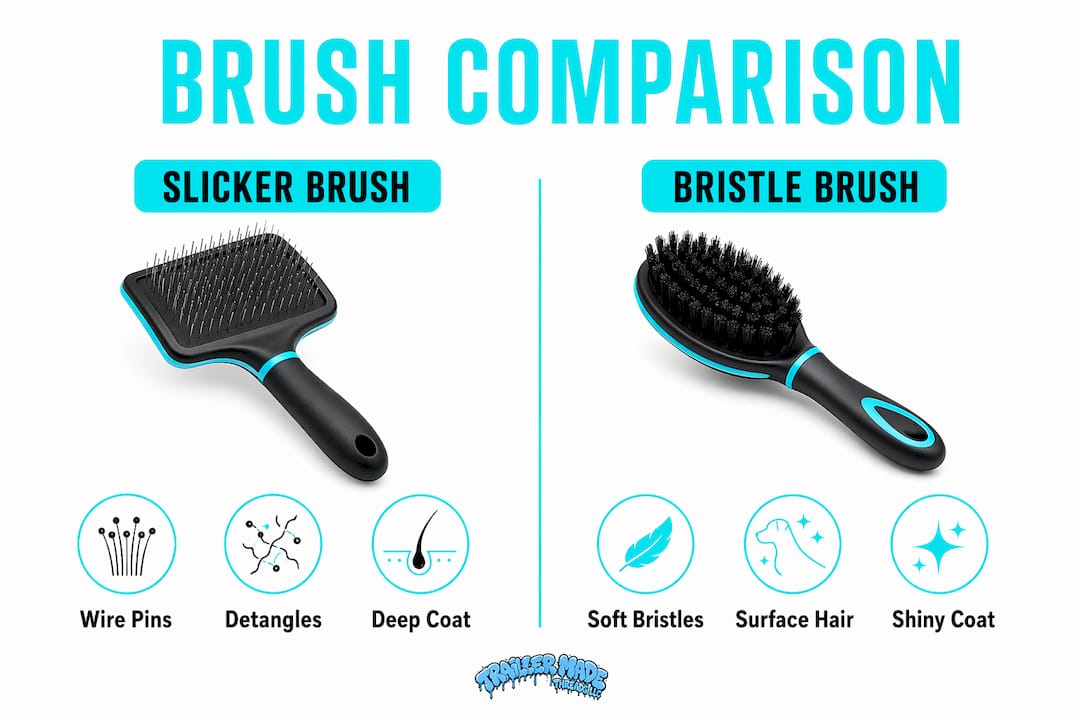
The core difference between these two brush types comes down to what they are built to reach. A slicker brush features short, fine wire bristles bent at angles to penetrate dense coats, while bristle brushes have longer, softer bristles designed to polish and remove surface debris. That structural difference determines everything about how each brush performs.
Slicker brushes work by pushing through the outer coat and reaching the deeper layers where mats and loose fur collect. The angled pins grab tangles and pull them free without requiring you to press hard. Bristle brushes can only brush the surface and often miss the deeper layers of long or curly coats entirely. That is not a flaw in the bristle brush. It is simply what the tool is designed to do.
Here is a side-by-side comparison of the two brush types:
| Feature | Slicker Brush | Bristle Brush |
|---|---|---|
| Bristle type | Short, angled wire pins | Natural or synthetic soft bristles |
| Coat penetration | Deep, reaches undercoat | Surface only |
| Best coat length | Medium to long, curly, wiry | Short, smooth |
| Primary function | Mat removal, detangling | Smoothing, adding shine |
| Skin stimulation | Moderate | Gentle |
| Maintenance | Requires regular pin cleaning | Low maintenance |
One underrated detail: some slicker brushes have self-cleaning retracting pins that release collected hair at the press of a button. This feature makes regular use far more practical and keeps the pins aligned for consistent performance.
Which coat types suit each brush?
Matching your brush to your dog’s coat type is the single most effective grooming decision you can make. Slicker brushes work best on breeds like Poodles, Shetland Sheepdogs, Golden Retrievers, and other dogs with curly, wiry, or dense double coats. Bristle brushes belong in the hands of owners with Beagles, Boxers, Dachshunds, or any short-coated breed.
Breeds and coats that benefit most from a slicker brush:
- Poodles and doodle mixes (curly, mat-prone coats)
- Shetland Sheepdogs and Collies (long, dense double coats)
- Cocker Spaniels (silky, feathered coats)
- Wire Fox Terriers and Schnauzers (wiry, textured coats)
- Siberian Huskies during shedding season (dense undercoat)
Breeds and coats that benefit most from a bristle brush:
- Beagles, Boxers, and Pugs (short, smooth coats)
- Labrador Retrievers as a finishing tool after slicker brushing
- Greyhounds and Whippets (very short, fine coats)
- Double-coated dogs needing a final polish after detangling
Bristle brushes are ideal for short, smooth coats to remove loose surface hair and add shine, and they are gentle enough for sensitive dogs. That gentleness is a real advantage for dogs that get anxious during grooming sessions.
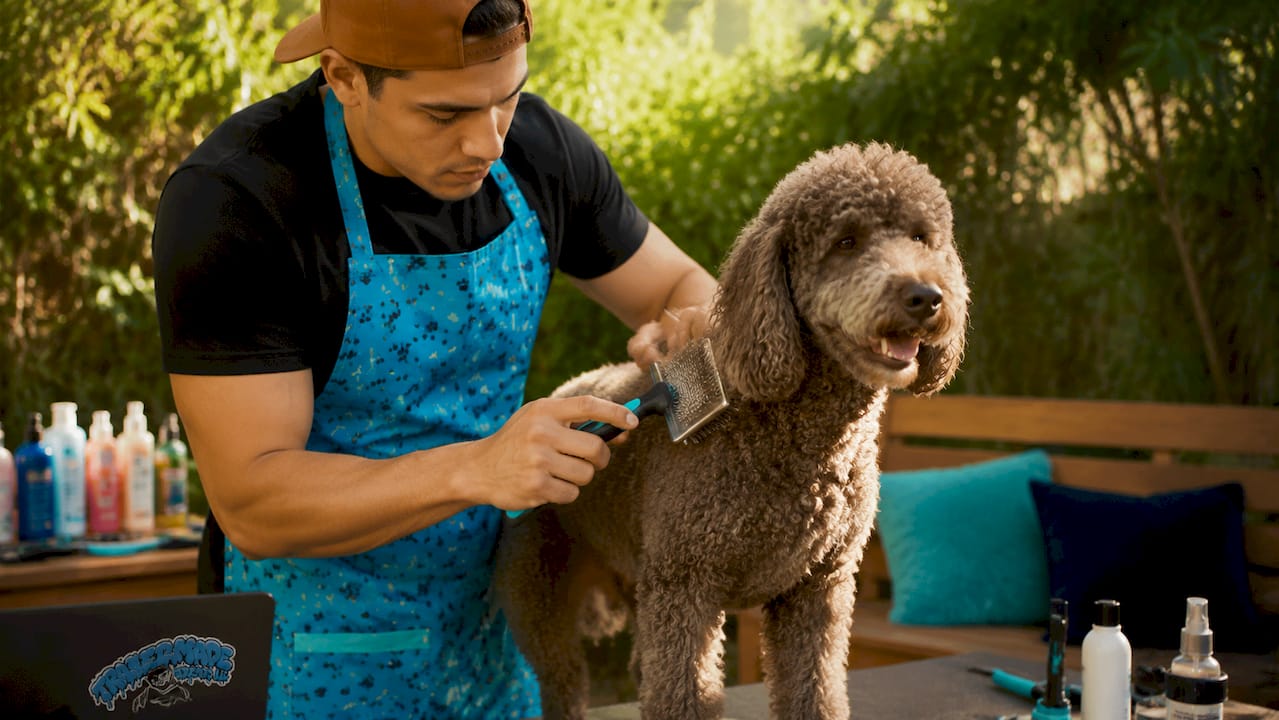
Pro Tip: If your dog has a double coat, use both brushes. Start with the slicker to detangle the undercoat, then finish with a bristle brush to smooth the outer layer and add a healthy shine.
What are the benefits and safety considerations?
The slicker brush benefits go well beyond basic detangling. Slicker brushes excel at controlling shedding by grasping loose hair deep in dense or curly coats, which directly reduces the amount of fur that ends up on your furniture and floors. They also stimulate blood circulation in the skin, which supports a healthier coat over time.
Bristle brush advantages are different but equally real. Bristle brushes remove loose surface hair and stimulate the skin gently, making them suitable for dogs with sensitive skin or low grooming tolerance. The smoothing action distributes natural oils across the coat, which is what gives short-coated dogs that polished, healthy look after a good brushing session.
Safety is where most pet owners make mistakes with slicker brushes. Follow these steps to groom safely:
- Use a light touch. Pressing too hard causes discomfort and can irritate the skin. Let the pins do the work without forcing them through the coat.
- Brush in sections. Work through one small area at a time rather than dragging the brush across the entire coat in one pass.
- Check for redness. After brushing, run your hand over the skin. Any pink or irritated patches mean you applied too much pressure.
- Clean the brush regularly. Slicker brushes require maintenance such as regular cleaning to keep pins aligned and effective. Bent or clogged pins scratch rather than groom.
- Switch tools for sensitive dogs. Some dogs with sensitive skin respond better to a rubber brush or bristle brush. Do not force a slicker brush on a dog that consistently reacts badly to it.
Pro Tip: After every slicker brush session, run a steel grooming comb through each section you just brushed. If the comb catches resistance, there is still a mat hiding below the surface.
How to build a grooming routine with both brushes
The most effective grooming routines use slicker and bristle brushes as a team, not as alternatives. Grooming routines that combine slicker brushes for detangling followed by finisher tools like bristle brushes or combs produce the best coat health results. Here is how to structure that routine by coat type.
For medium to long or curly coats:
- Start with a pet hair spray brush or a light mist of water to reduce static and make detangling easier.
- Use the slicker brush in small sections, working from the ends of the coat toward the roots to avoid pulling.
- After each section, run a steel comb through to confirm the mat is fully gone. Professional groomers treat slicker brushing as a diagnostic step, checking each section with a steel comb immediately after to catch hidden mats.
- Finish with a bristle brush across the full coat to smooth and add shine.
- Use a grooming glove on the face, legs, and other areas where a brush feels too bulky.
For short or smooth coats:
- Skip the slicker brush for routine sessions. A bristle brush alone handles most grooming needs.
- Use a rubber grooming glove first to loosen dead hair, then follow with the bristle brush to collect it.
- Finish with a soft cloth wipe-down to bring out the coat’s natural shine.
Complementary tools worth adding to your kit:
- A steel comb to verify detangling after slicker brushing
- A grooming glove for sensitive areas and face work
- A pet hair removal broom to handle the fur that ends up on your floors after a session
The comb step is the one most pet owners skip. Slicker brushes can smooth the coat superficially while mats remain below the surface. The comb catches what the brush misses.
Key takeaways
The right brush choice depends entirely on your dog’s coat depth: slicker brushes penetrate and detangle, while bristle brushes smooth and shine.
| Point | Details |
|---|---|
| Slicker brush purpose | Use on medium to long, curly, or dense coats to remove mats and loose fur. |
| Bristle brush purpose | Use on short, smooth coats or as a finishing tool to add shine after detangling. |
| Safety with slicker brushes | Always use a light touch to avoid skin irritation, and clean pins regularly. |
| Comb check is non-negotiable | Follow every slicker brush session with a steel comb to catch hidden mats. |
| Best results use both | Pair slicker and bristle brushes together for a complete, coat-healthy routine. |
What i have learned after years of watching pet owners groom
Most pet owners buy one brush and expect it to do everything. That is the root of most grooming frustration I see. A slicker brush on a Beagle is overkill and can irritate the skin. A bristle brush on a Goldendoodle is nearly useless for anything below the surface layer.
The mistake I see most often is skipping the comb check after slicker brushing. The brush can make the coat look smooth while a tight mat sits underneath, getting worse with every session. A steel comb takes 30 extra seconds per section and tells you exactly what is still there.
The other thing I want to push back on is the idea that slicker brushes are harsh. They are not harsh when used correctly. The wire pins are designed to flex, not scrape. The problem is always pressure, not the tool itself. A light wrist and short strokes make the slicker brush one of the most effective grooming tools available for any dog with a coat longer than an inch.
My honest recommendation: own both brushes. Use the slicker to do the real work on textured or long coats, then finish with the bristle brush to smooth and distribute oils. Add a steel comb to your kit and use it every single time after slicker brushing. That three-tool combination handles nearly every coat type you will encounter.
— Eric
Complete your grooming kit with the right accessories
Brushes do the heavy lifting, but the right accessories make every session faster and more comfortable for your pet.

Thegittinspotaccessories carries a grooming glove for pets that works perfectly alongside both slicker and bristle brushes. The glove reaches areas where a brush feels too rigid, like the face, legs, and belly, while still collecting loose fur efficiently. Pair it with a pet grooming comb to confirm your detangling work after every slicker brush session. Thegittinspotaccessories also offers a Pet Hair Spray Brush that combines a moisture mist with brushing action, making it especially useful before slicker brushing to soften the coat and reduce static. These tools work together so your grooming routine actually gets done.
FAQ
What is the main difference between a slicker and bristle brush?
A slicker brush uses short, angled wire pins to penetrate and detangle medium to long or curly coats, while a bristle brush uses soft natural or synthetic bristles to smooth and shine short coats. The two tools address different coat depths and grooming goals.
Can i use a slicker brush on a short-coated dog?
A slicker brush is generally unnecessary for short coats and can cause skin irritation if used with too much pressure. A bristle brush or rubber grooming glove is a better fit for smooth, short-coated breeds like Boxers or Beagles.
How do i use a slicker brush without hurting my dog?
Use a light touch and work in small sections, letting the angled pins do the work without pressing into the skin. Follow each section with a steel comb to check for remaining mats and watch for any redness on the skin after brushing.
Do i need both a slicker brush and a bristle brush?
If your dog has a medium to long or curly coat, yes. Use the slicker brush to detangle and remove mats, then finish with the bristle brush to smooth the coat and add shine. Short-coated dogs typically only need the bristle brush for routine maintenance.
How often should i clean my slicker brush?
Clean your slicker brush after every grooming session to keep the pins aligned and free of debris. Some slicker brushes include a self-cleaning button that retracts the pins to release collected hair, which makes this step much faster.