
Wet vs dry brushing pets is the choice between grooming your animal’s coat when it’s dry versus when it’s wet or damp, and that single decision shapes coat health, comfort, and how long the session takes. Dry brushing is the standard method for most grooming situations. Wet brushing has a narrow, specific role. Using the wrong method at the wrong time causes matting, hair breakage, and real discomfort for your pet. Tools like slicker brushes, de-shedding combs, and flexible bristle brushes each perform differently depending on whether the coat is dry or damp. Knowing which to reach for, and when, is the difference between a productive grooming session and one that damages the coat you’re trying to protect.
Why dry brushing is the best method for most pet grooming
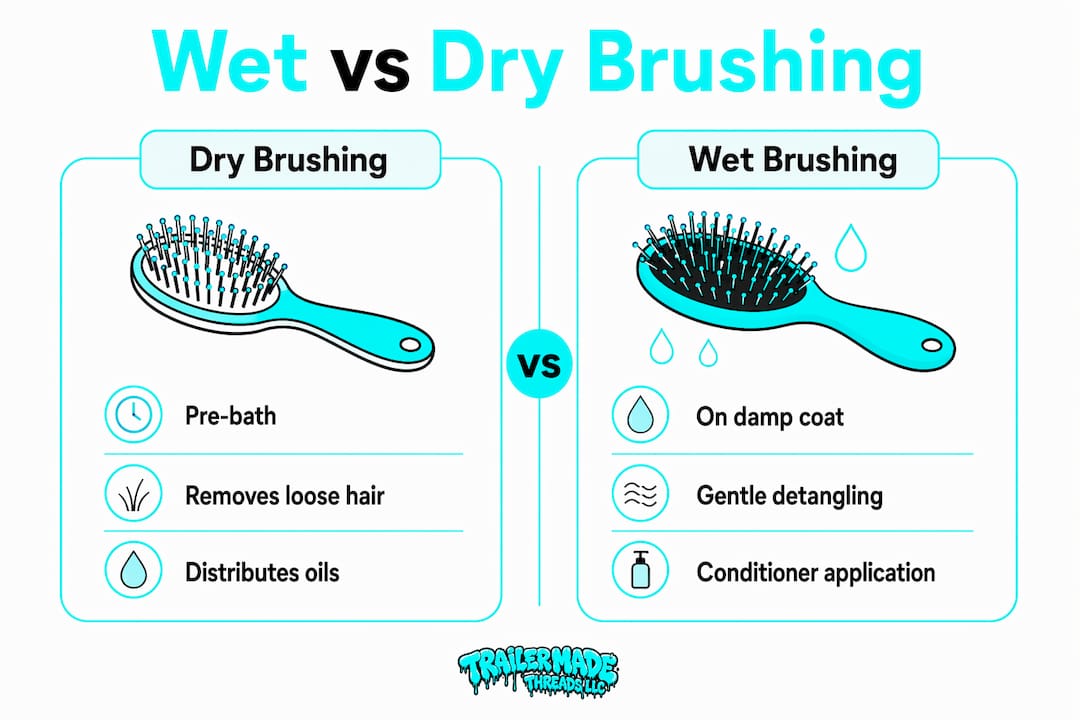
Dry brushing is the foundation of effective pet grooming techniques, and it belongs at the start of every bath routine. Brushing before a bath removes 60–80% of loose hair, dirt, and dander. That means less clogging in your drain, a cleaner wash, and a coat that dries faster afterward.
The benefits go beyond hair removal. Dry brushing enables skin checks that reveal fleas, redness, flaking, or lumps that are nearly impossible to spot on a wet coat. Catching these issues early makes a real difference in your pet’s health. A slicker brush or bristle brush on dry fur lets you feel the skin surface as you work, giving you information a bath alone never would.
Coat type changes how you approach dry brushing, but not whether you do it.
- Short coats (Labrador Retrievers, Beagles): A rubber curry brush or bristle brush works well. Brush in the direction of hair growth, two to three times per week.
- Double coats (Huskies, Golden Retrievers): Use a de-shedding tool like the Furminator or a wide-tooth comb first, then follow with a slicker brush. During shedding season, daily brushing prevents undercoat buildup.
- Long and curly coats (Poodles, Shih Tzus): Use the line brushing technique. Part the coat horizontally and work section by section from the skin outward. This method catches hidden mats before they tighten.
- Cats with dense coats (Maine Coons, Persians): A wide-tooth comb followed by a soft slicker brush removes loose fur without pulling.
Pro Tip: Start every dry brushing session at the legs and belly, where mats form first. Work toward the back and tail. This order catches problem areas before they get wet.
Dry brushing also conditions the coat naturally. The brush distributes skin oils from root to tip, which adds shine and reduces static. This is why professional groomers always dry brush before and after a bath, not just once.
When should you use wet brushing on pets?
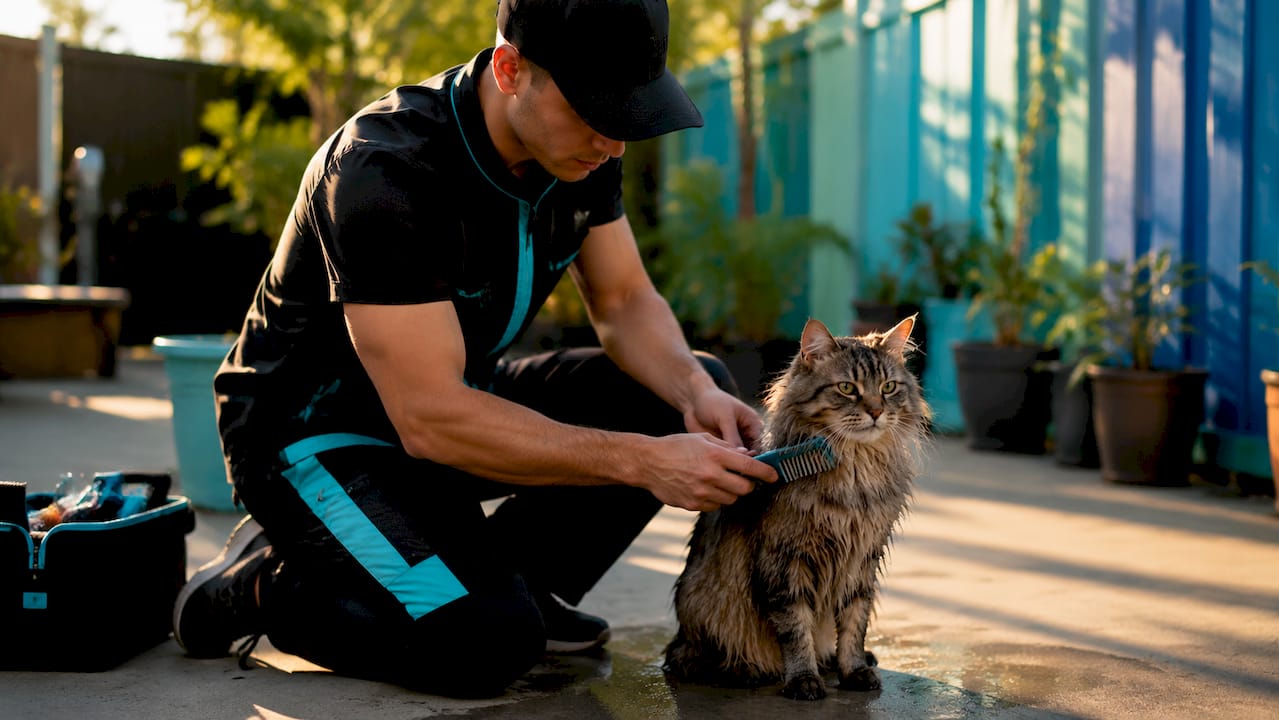
Wet brushing has a real but limited role in pet grooming. The key distinction professional groomers make is between wet and damp. Wet and damp brushing are not interchangeable. Damp brushing offers better control and far less damage risk compared to brushing fur that is dripping wet.
The science behind this matters. Wet hair is up to 50% weaker than dry hair because water breaks the hydrogen bonds in keratin, the structural protein in hair shafts. This makes wet fur highly elastic and fragile. Pulling a stiff slicker brush through a soaking wet coat causes breakage at the shaft, not just at the tangle.
Appropriate uses for wet or damp brushing include:
- Distributing conditioner through the coat during a bath, using a wide-tooth comb or flexible bristle brush
- Light detangling on damp fur after towel drying, when the coat is about 70–80% dry
- Applying a detangling spray and working through minor knots with a wide-tooth comb before the coat fully dries
Wet brushing should be limited to gentle conditioner distribution or light detangling on damp coats. It is not a substitute for dry brushing when it comes to mat removal or thorough de-shedding.
The biggest mistake pet owners make is brushing mats on a wet coat. Water tightens existing mats, making them painful and nearly impossible to remove without scissors. If you find a mat after a bath, let the coat dry completely before attempting to work it out.
Pro Tip: Use a detangling spray on damp fur instead of plain water. Products like TropiClean Tangle Remover reduce friction and make a wide-tooth comb glide through minor knots without pulling.
The right tools for damp brushing are a wide-tooth comb, a flexible pin brush, or a pet grooming comb with rounded tips. Avoid stiff wire slicker brushes on wet coats entirely.
How to combine both methods in your grooming routine
The most effective pet brushing routine uses both methods in the right sequence. Here is how to structure a complete grooming session:
- Dry brush before the bath. Use a slicker brush or de-shedding tool to remove loose hair and work out any mats. This pre-bath step removes the bulk of shed fur and prevents mats from tightening in water.
- Bathe your pet. Use a pet-safe shampoo and rinse thoroughly. Apply conditioner and use a wide-tooth comb to distribute it through the coat while the fur is wet.
- Towel dry first. Press towels against the coat rather than rubbing, which creates friction and tangles. Remove as much moisture as possible.
- Blow dry to damp, not bone dry. Use a low-heat pet dryer or a regular dryer on the cool setting. Keep the coat moving to avoid heat concentration. Stop when the coat is about 80% dry.
- Comb through damp fur. Use a wide-tooth comb or flexible bristle brush to work through any remaining minor tangles while the coat is still slightly damp.
- Finish with a dry brush. Once the coat is fully dry, use a slicker brush or bristle brush for a final pass. This step removes the remaining 20–40% of loose hair and gives the coat its finished smoothness and shine.
Seasonal grooming changes the frequency but not the sequence. During spring and fall shedding seasons, double-coated breeds like Huskies and German Shepherds may need daily dry brushing to manage undercoat release. In muddy seasons, a quick dry brush after outdoor time prevents dirt from working into the coat and forming mats near the skin.
Pro Tip: For natural coat health, pair your brushing routine with a diet rich in omega-3 fatty acids. Coat condition reflects nutrition, and no amount of brushing compensates for a poor diet.
What mistakes damage coats during brushing?
Most coat damage during grooming comes from a small set of repeatable errors. Recognizing them protects your pet’s fur and makes sessions less stressful for both of you.
- Brushing wet mats. Most pet owners mistakenly brush mats after wetting, which causes the mat to tighten irreversibly. Always remove mats before the bath, while the coat is dry.
- Using stiff brushes on wet fur. A wire slicker brush on a soaking wet coat snaps hair at the shaft. Switch to a wide-tooth comb or flexible pin brush for any wet or damp work.
- Pulling through tangles in one stroke. Hold the hair above the tangle with your free hand to absorb the tension. Work from the tip of the tangle inward toward the skin, not the other way around.
- Skipping regular sessions. Irregular grooming allows loose hair to weave into the coat and form mats. Short-coated dogs need brushing two to three times per week. Long and curly coats need it daily or every other day.
- Rushing the session. Pets that associate brushing with discomfort become harder to groom over time. Behavior-focused grooming increases pet cooperation and reduces stress. Keep sessions short, use treats, and stop before your pet reaches its tolerance limit.
Pro Tip: A grooming glove works well for pets that resist traditional brushes. The glove mimics petting, which most animals accept immediately, and it removes loose fur effectively on short to medium coats.
Building a consistent healthy grooming habit is the single most effective way to prevent the mat buildup that makes grooming painful and expensive.
Key takeaways
Dry brushing is the primary method for effective pet coat care, and wet brushing serves only a narrow role on damp, conditioned fur.
| Point | Details |
|---|---|
| Dry brush before every bath | Pre-bath dry brushing removes 60–80% of loose hair and prevents mats from tightening in water. |
| Wet hair is fragile | Wet fur is up to 50% weaker than dry fur, so use only wide-tooth combs or flexible brushes on damp coats. |
| Wet vs damp is a real distinction | Damp brushing for conditioner distribution is safe; brushing dripping wet fur causes breakage and mat tightening. |
| Follow the correct sequence | Dry brush, bathe, towel dry, comb damp, then finish with a final dry brush for best coat results. |
| Consistency prevents damage | Regular dry brushing sessions prevent mat buildup and make every grooming session shorter and less stressful. |
What i’ve learned after years of watching pet owners brush wrong
Most grooming mistakes I see come from one misunderstanding: people treat wet fur like it’s just easier to work with. It feels that way. The coat looks smoother, tangles seem to comb out faster, and the whole process feels more manageable. That feeling is misleading. Wet fur gives way under the brush not because the tangle is gone, but because the hair shaft is breaking.
The owners who get the best results are the ones who invest time in the dry brushing session before the bath, not after. They work slowly, use the line brushing technique on longer coats, and treat the pre-bath brush as the main event. The bath is just cleanup.
I also think the behavioral side of grooming is underrated. Pets that learn early to accept brushing as a normal, calm handling event are genuinely easier to groom for their entire lives. The AKC’s guidance on this is worth reading. Start young if you can, keep sessions short, and use high-value treats. A dog that holds still for a full dry brushing session is not lucky. It was trained.
If your pet’s coat is in rough shape, see a professional groomer before attempting to remove heavy mats at home. A groomer can assess whether the mat can be worked out or needs to be shaved, and they can show you the right tools and technique for your specific breed. That one session often teaches more than any article can.
— Eric
The right tools make every brushing session easier
Getting your technique right matters, but the tools you use determine how comfortable the session is for your pet.

Thegittinspotaccessories carries a range of grooming products built for real pet owners dealing with real coat challenges. The Pet Hair Spray Brush combines a spray function with a brush head, letting you lightly dampen the coat for damp brushing without a separate bottle. It’s the kind of practical design that removes one step from the routine. For daily maintenance and pets that resist traditional brushes, the grooming glove delivers effective shedding removal in a format most pets accept without hesitation. Pair either tool with a quality de-shedding comb, and you have everything needed to run the full dry-to-damp brushing sequence at home.
FAQ
What is the main difference between wet and dry brushing for pets?
Dry brushing removes loose hair, detects skin issues, and prevents mat formation. Wet brushing is limited to gentle detangling or conditioner distribution on damp, not dripping wet, fur.
Can i brush my dog right after a bath?
Wait until the coat is at least 70–80% dry before brushing. Brushing fully wet fur causes breakage because wet hair is up to 50% weaker than dry hair.
How often should i dry brush my pet?
Short-coated breeds need dry brushing two to three times per week. Long-coated and double-coated breeds benefit from daily brushing, especially during shedding seasons.
What brush should i use on a damp coat?
Use a wide-tooth comb or a flexible pin brush on damp fur. Avoid stiff wire slicker brushes, which snap fragile wet hair shafts.
Does brushing before a bath really make a difference?
Pre-bath dry brushing removes 60–80% of loose hair and prevents existing mats from tightening in water, which makes the bath more effective and the post-bath grooming far easier.