
Wet brushing is defined as grooming a dog’s coat while it is damp, using tools designed to detangle without causing breakage or pain. This technique works because damp hair is more pliable than fully dry hair, making knots easier to work through with less force. Tools like the IntelliFlex bristle brush and silicone bath brushes are purpose-built for this state, giving you real control over tangles without stressing your dog. If your dog has a wavy, curly, or tangle-prone coat, learning to wet brush your dog effectively is one of the highest-return grooming skills you can develop.
What tools and prep do you need to wet brush your dog effectively?
The right tools make the difference between a smooth grooming session and a frustrated dog. For damp coats, wide-tooth combs and detangling brushes are the correct choice. Slicker brushes belong on dry coats only. Using a slicker brush on wet hair pulls and snaps the shaft, causing the exact damage you are trying to prevent.
Here are the core tools to have ready before you start:
- Detangling brush or wide-tooth comb: Works through knots without tearing wet hair
- Silicone bath brush: Increases shampoo lather by 300% during the bath itself, driving product deep into dense coats
- IntelliFlex bristle brush: Flexible bristles that bend under pressure instead of dragging, ideal for sensitive dogs
- Microfiber towel: Absorbs up to seven times its weight in water, getting your dog to the ideal damp state fast
- Detangling spray or leave-in conditioner: Adds slip to the coat, cutting friction during brushing
The coat state you are aiming for is damp, not dripping. A soaking wet coat is actually more elastic and fragile, which means it breaks more easily under brush pressure. Towel dry first with a microfiber towel, then apply your detangling spray or conditioner before picking up the brush. That sequence protects the hair shaft and makes every stroke count.
Pro Tip: Apply conditioner or detangling spray section by section rather than all at once. This keeps each area workable while you focus on it, preventing the product from drying out before you get there.
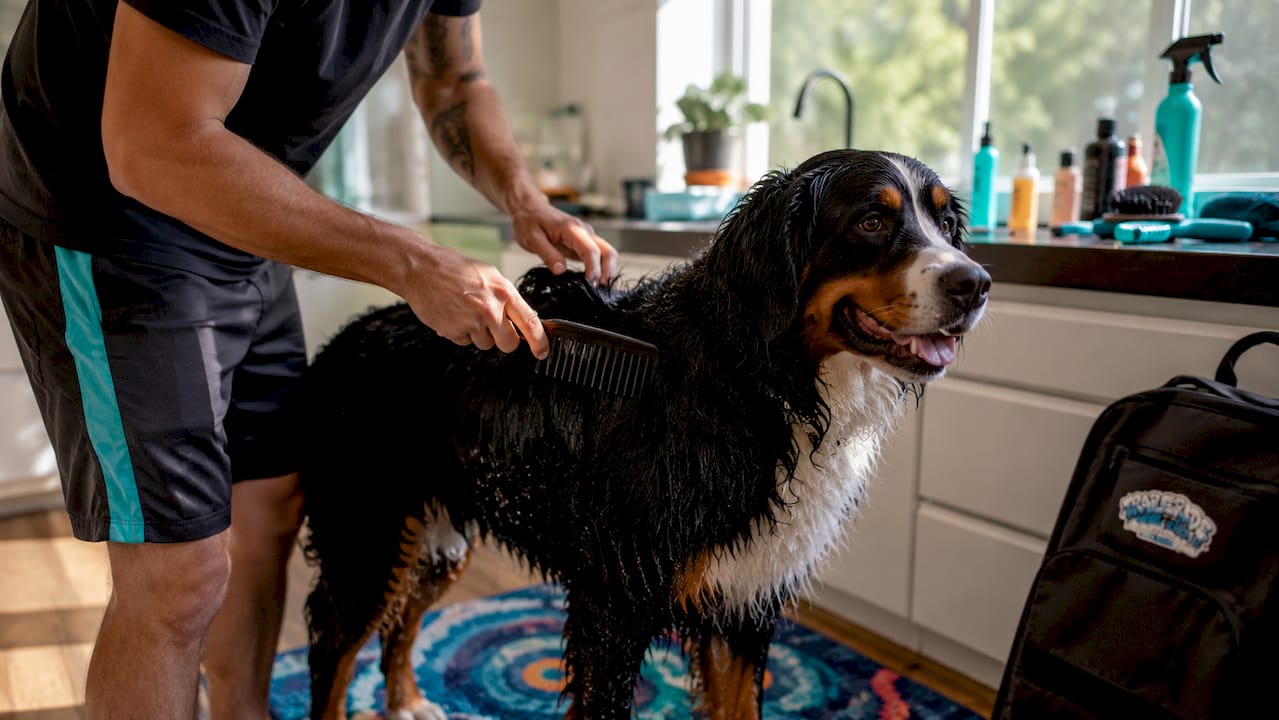
How to brush your dog when wet: a step-by-step process
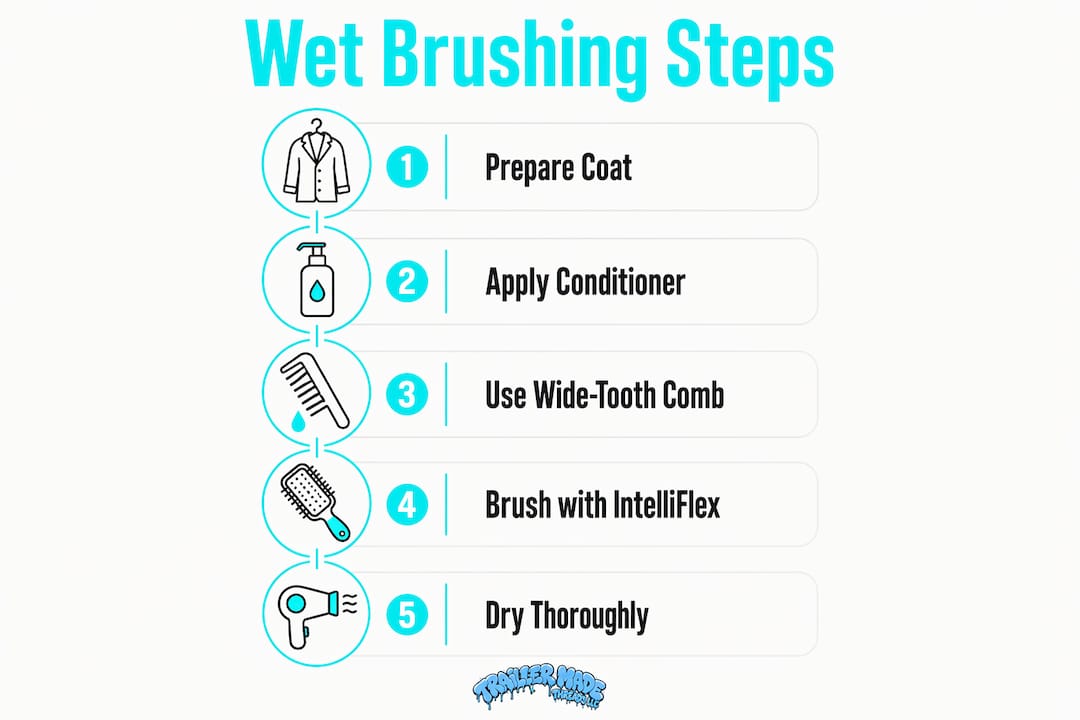
Following a clear sequence protects your dog’s coat and keeps the session calm. Rushing through any step creates more tangles, not fewer.
- Towel dry to damp. Use a microfiber towel and press, do not rub. Rubbing creates friction that knots the coat before you even start brushing.
- Apply detangling product. Spray or work in a leave-in conditioner evenly through the coat. For thick or double-coated breeds, part the fur and apply directly to the underlayer.
- Start at the feet and work upward. Beginning at the lowest point and moving toward the body prevents you from pushing tangles further into the coat. This is the same sequence professional groomers use.
- Work in small sections. Hold the base of each section with one hand to anchor the skin. This stops tugging from reaching the skin and causing pain.
- Use short, gentle strokes in the direction of hair growth. Never brush against the grain on a wet coat. Short strokes give you more control and catch tangles before they tighten.
- Switch to the flat side of the brush for finishing. Tools like the IntelliFlex dual-sided brush have a smoothing side that lays the coat flat after detangling, giving a clean finish.
- Reward and reassure throughout. Pause between sections to let your dog settle. A calm dog holds still, which makes every stroke more accurate.
Pro Tip: For dogs with very dense undercoats, like Golden Retrievers or Bernese Mountain Dogs, use a wide-tooth comb first to break up the bulk of the tangle, then follow with the detangling brush for a finer pass. Two tools in sequence beat one tool used repeatedly.
The flexible IntelliFlex bristles are especially effective on medium-to-long and fine wavy coats. They reduce breakage by flexing with the coat rather than fighting it. For sensitive areas like the belly, ears, and legs, use lighter pressure and shorter strokes than you would on the back or sides.
What mistakes should you avoid when wet brushing your dog?
Most grooming problems trace back to a handful of repeatable errors. Knowing them in advance saves your dog discomfort and saves you time.
- Brushing a soaking wet coat. Hair is most fragile when fully saturated. Always towel dry to damp first before any brushing begins.
- Using a slicker brush on wet hair. Slicker brushes are designed for dry coats. On wet hair, the wire pins catch and snap strands rather than glide through them.
- Brushing against the direction of hair growth. This creates friction knots and is painful for the dog. Always follow the natural lay of the coat.
- Rushing through mats. Forcing a brush through a tight mat tears hair and hurts your dog. If a mat resists wet brushing, stop and address it separately.
- Ignoring stress signals. Lip licking, yawning, turning away, and low body posture are all signs your dog needs a break. Pushing through these signals makes future grooming sessions harder.
For mats that will not yield to wet brushing, the right approach is to address them dry first. Apply a detangling spray to the dry mat, work the edges with a wide-tooth comb, and break it apart before the bath. Trying to brush out a tight mat on a wet coat causes breakage and pain.
Wet brushing works best as a detangling and smoothing step, not a mat removal step. Mats need to be loosened before the coat gets wet, or they tighten further under water pressure.
How does wet brushing fit into your dog’s full grooming routine?
Wet brushing is one piece of a larger system. Professional groomers follow a proven sequence: dry brush first, then bathe, then wet detangle, then blow dry, then final dry brush. Each step has a specific job, and skipping one makes the next step harder.
The dry brush before the bath removes loose hair and surface debris. This matters because wet hair traps shed fur against the skin, which creates mats during drying. The wet detangle step after the bath is where your detangling brush or IntelliFlex tool does its best work. The final dry brush smooths and finishes the coat once it is fully dry.
Frequency depends on coat type. The table below gives a practical starting point.
| Coat type | Wet brushing frequency | Best tool |
|---|---|---|
| Curly (Poodle, Doodle) | 3–5 times per week | Detangling brush with conditioner |
| Wavy (Spaniel, Setter) | 2–3 times per week | IntelliFlex bristle brush |
| Double coat (Husky, Lab) | Once per week with bath | Wide-tooth comb, then detangling brush |
| Short and smooth (Beagle, Boxer) | Once per week or as needed | Silicone bath brush |
Wavy and curly coats benefit most from damp brushing with conditioner, which reduces friction by up to 50% during detangling. That reduction is significant. It means fewer broken hairs, less pain for your dog, and a coat that stays tangle-free longer between sessions.
After wet brushing, drying properly is not optional. Moisture trapped in a dense undercoat creates the warm, damp conditions that allow bacteria and yeast to grow. Microfiber towels remove the bulk of the water fast, and a low-heat dryer or air drying in a warm room finishes the job. Diet also plays a role in coat resilience. A coat supported by quality nutrition is less prone to breakage during brushing. Research on freeze-dried food for coat health shows that nutrient-dense diets contribute directly to stronger, shinier fur.
For shedding control, combining wet brushing with a grooming glove during the bath adds a second layer of loose hair removal. The glove reaches areas a brush misses, like the chest and under the legs, and most dogs tolerate it well because it feels like a massage. You can read more about wet vs. dry brushing to understand when each method delivers the best results for your specific dog.
Key Takeaways
Wet brushing a dog effectively requires the right coat state, the right tools, and a consistent sequence built into your overall grooming routine.
| Point | Details |
|---|---|
| Damp is the target state | Towel dry after bathing before brushing to protect the hair shaft from breakage. |
| Match tools to moisture | Use detangling brushes and wide-tooth combs on wet coats; save slicker brushes for dry coats only. |
| Work from feet upward | Starting low and moving toward the body prevents tangles from compacting deeper into the coat. |
| Frequency by coat type | Curly and wavy coats need wet brushing 3–5 times per week; double coats need it once per week with a bath. |
| Dry thoroughly after brushing | Trapped moisture in the undercoat creates bacterial buildup; microfiber towels and airflow prevent this. |
What I have learned from wet brushing dogs of every coat type
I have used the IntelliFlex bristle brush on dogs ranging from a tightly curled Bichon Frise to a double-coated Siberian Husky, and the single biggest lesson is this: most grooming resistance from dogs is not about the brushing itself. It is about the pressure. Traditional wire brushes drag against the skin even when used gently. The moment I switched to flexible bristle tools, I noticed dogs that used to squirm and pull away actually staying still. That is not a small thing. A dog that holds still gets brushed properly, which means fewer mats, less time spent on each session, and a calmer animal overall.
The second thing I learned is that new owners almost always start brushing from the back and work toward the tail. That feels natural because it mirrors how you would pet a dog. But it pushes tangles forward and compresses them. Starting at the feet and working upward changed my results immediately.
For owners just starting out with wet brushing, I recommend beginning with a silicone bath brush during the actual bath. It is low-commitment, your dog is already wet, and the circular motion gets them used to the sensation of a tool on their coat. Once they accept that, introducing a detangling brush after towel drying feels like a small step rather than a new experience. Patience in the first few sessions pays off for every session that follows. If you want a deeper look at bristle vs. slicker brush differences, that comparison will help you choose the right tool for your dog’s specific coat.
— Eric
Tools from Thegittinspotaccessories that make wet brushing easier
Thegittinspotaccessories built the Pet Hair Spray Brush specifically for damp coat grooming. It combines a spray function with a brush head, so you can apply conditioner or detangling spray and brush in the same motion. That cuts session time and keeps the coat at the right moisture level throughout.

For bath time, the grooming glove for pets removes loose hair while massaging the coat, reaching spots a brush cannot. Pair it with the Pet Hair Spray Brush for a complete after-bath grooming setup that handles detangling, conditioning, and shedding control without switching between five different tools. Thegittinspotaccessories keeps the designs practical and the price accessible, so you get professional-level results at home.
FAQ
What is the best brush for a wet dog?
A detangling brush with flexible bristles, like an IntelliFlex-style brush, or a wide-tooth comb is the best choice for a wet dog. Slicker brushes should only be used on fully dry coats to avoid snapping the hair shaft.
How wet should my dog’s coat be before brushing?
The coat should be damp, not dripping. Towel dry with a microfiber towel after the bath until the coat no longer releases water when pressed, then apply a detangling spray before brushing.
How often should I wet brush my dog?
Frequency depends on coat type. Curly and wavy coats like Poodles and Doodles benefit from brushing 3–5 times per week using damp brushing with conditioner. Double-coated and short-coated breeds typically need wet brushing once per week during bath time.
Can wet brushing help with shedding?
Wet brushing removes loose hair more effectively than dry brushing alone on many coat types, especially when combined with a grooming glove during the bath. Dry brushing before the bath also pulls out shed fur before water traps it against the skin.
Is it safe to brush my dog right after a bath?
Brushing immediately after a bath is safe only if you towel dry first. Brushing a fully saturated coat causes breakage because wet hair is at its most elastic and fragile state.