
Pet grooming brushes are specialized tools designed to maintain your pet’s coat health and hygiene based on their unique fur type. The five primary types are slicker brushes, pin brushes, bristle brushes, undercoat rakes, and rubber curry mitts. Each one targets a different coat texture, length, or grooming challenge. Choosing the wrong brush wastes time and can irritate your pet’s skin. Choosing the right one turns a chore into a bonding routine that keeps your pet comfortable, clean, and looking their best.
1. What are the main types of pet grooming brushes?
The five core brush types cover nearly every coat situation you will encounter as a pet owner. Each has a specific job, and most pets need at least two tools to complete a proper grooming session.
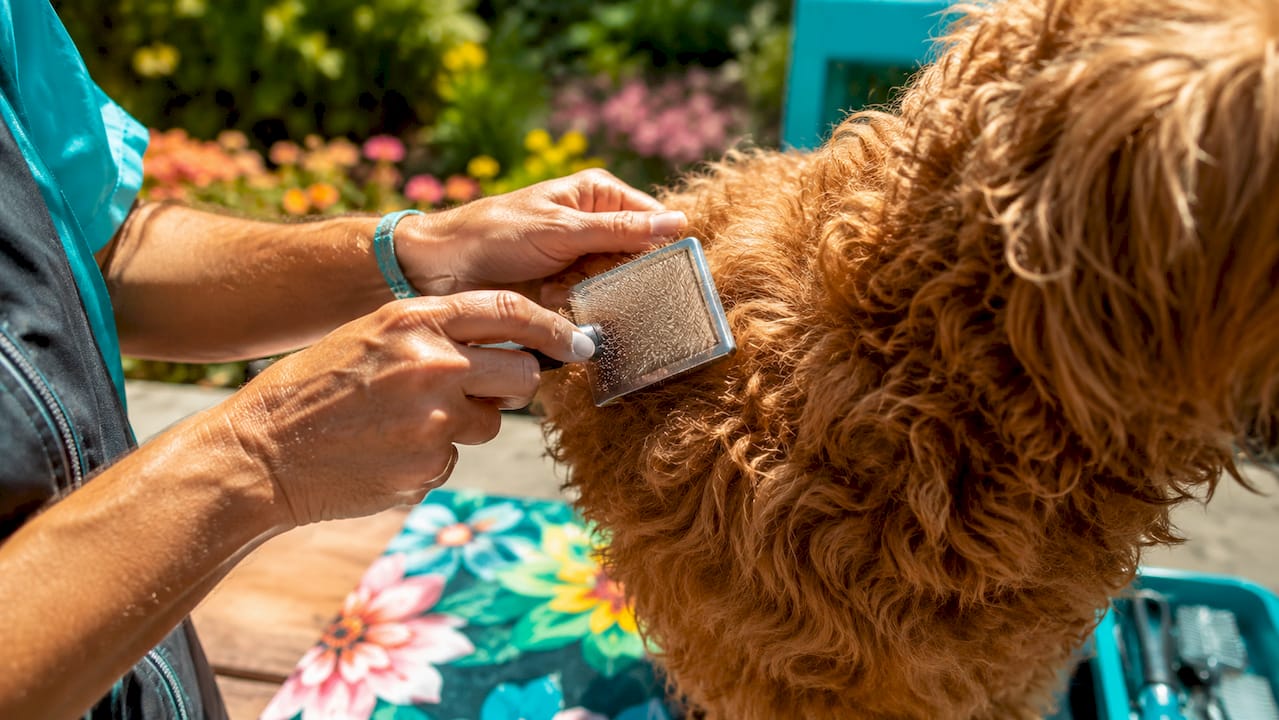
Slicker brushes feature fine, short wire bristles set in a flat or slightly curved pad. They excel at removing mats and tangles in curly, wavy, and long coats. Breeds like Golden Retrievers, Poodles, and Bichon Frises benefit most from slicker brushes. Use light, short strokes and let the brush do the work, not your arm.
Pin brushes look similar to a human hairbrush, with widely spaced metal pins topped with small protective balls. They work best for daily maintenance on long, silky coats like those on Afghan Hounds or Yorkshire Terriers. Pin brushes also gently massage the skin, which stimulates circulation and distributes natural oils through the coat.
Bristle brushes use tightly packed natural or synthetic bristles. They suit short, smooth coats found on Beagles, Boxers, and most domestic shorthair cats. Bristle brushes lift loose hair, remove surface debris, and add visible shine by spreading the coat’s natural oils evenly.
Undercoat rakes are designed for heavy-shedding, double-coated breeds like Huskies, German Shepherds, and Corgis. The long, widely spaced teeth reach through the topcoat to pull out loose undercoat fur. Undercoat rakes must only be used after mats are already removed with a slicker brush, or the rake will painfully drag through knots.
Rubber curry brushes and mitts are the gentlest option. They use soft rubber nubs to lift loose hair and massage the skin simultaneously. Short-coated pets and cats often tolerate rubber mitts better than any other grooming tool. The grooming glove for pets from Thegittinspotaccessories is a strong example of this category, combining effective hair removal with a comfortable, skin-friendly design.
Steel combs serve as the finishing tool. A metal greyhound comb run through the coat after brushing reveals any hidden tangles the brush missed. If the comb catches, that area needs more attention before grooming is complete.
Pro Tip: Always finish every grooming session with a steel comb. If it glides through without resistance, you are done. If it catches, go back to your slicker or pin brush on that spot.
2. How to choose the right grooming brush based on coat type
Matching your brush to your pet’s coat type is the single most important decision in building a grooming routine. The wrong tool either misses the problem entirely or creates new ones.
| Coat Type | Primary Brush | Secondary Tool | Frequency |
|---|---|---|---|
| Short, smooth | Bristle brush or rubber mitt | Steel comb | Weekly to 3x per week |
| Medium, wavy | Slicker brush | Pin brush | 3x per week |
| Long, silky | Pin brush | Slicker brush + steel comb | Daily |
| Curly (Poodle, Bichon) | Slicker brush | Steel comb | Daily |
| Double coat (Husky, Shepherd) | Slicker brush | Undercoat rake + steel comb | Daily during shedding season |
| Wire or rough coat (Terriers) | Slicker brush | Bristle brush | 2x per week |
Brushing frequency varies significantly by coat type. Short coats may need only weekly to three-times-weekly sessions. Long, curly, or double coats need daily or near-daily brushing, especially during spring and fall shedding seasons. Missing sessions on a long coat does not just mean more work later. It means mats that form close to the skin and require professional intervention to remove safely.
For curly and wavy coats like Poodles and Bichons, slicker brushes remove mats while pin brushes help maintain the curl pattern without destroying texture. Using only one tool on these coats leaves the job half done.
Pro Tip: When in doubt about your pet’s coat category, check with your vet or a professional groomer. A five-minute consultation can save you from buying the wrong tools and frustrating your pet in the process.
For more detail on two of the most commonly confused options, the slicker vs. bristle brush comparison from Thegittinspotaccessories breaks down exactly which coat types each one serves.
3. What are expert tips and common mistakes in pet brushing?
Most grooming mistakes come from applying too much pressure or using the wrong sequence of tools. Both errors cause discomfort and can damage the coat or skin.
Brush burn is real. Brushing too hard causes tiny skin abrasions that lead to redness and infection. Experts at Angie’s Mobile Pet Styling specifically warn that pet skin is much thinner than human skin. Your arm strength should never be the driving force. The brush does the work when you use the right tool correctly.
Line brushing is the most effective technique for long-haired pets. The line brushing method lifts sections of coat and brushes down to the skin systematically. This prevents hidden mats from forming beneath a coat that looks brushed on the surface. Most owners brush only the top layer and miss the dense fur closest to the skin where mats actually develop.
Sequence matters more than most owners realize. Proper brush sequencing means using a slicker brush first to remove mats, then an undercoat rake to pull loose undercoat, and finally a steel comb to confirm the coat is fully clear. Skipping steps or reversing the order causes pain and coat damage.
“Never use scissors to cut out a mat. Pet skin is thin and mats pull it taut, making cuts almost inevitable. Use a dematting tool or call a professional groomer instead.” — Brushing Basics, Operation Saves
Scissors near mats are dangerous. Using scissors on tight mats risks cutting the pet’s skin because the mat pulls the skin upward. A dematting comb or a professional groomer is always the safer choice.
Ergonomics matter for you too. Professional-grade brushes priced from $10 to over $55 typically feature ergonomic handles designed to reduce hand fatigue during long sessions. Brushes with rubberized tips also protect sensitive skin during grooming. If your hand cramps after five minutes, your brush handle is working against you.
For a full list of what not to do, the common brushing mistakes guide from Thegittinspotaccessories covers the most frequent errors pet owners make and how to correct them.
4. How to maintain your pet grooming brushes for longevity and hygiene
A dirty brush is an ineffective brush. Hair, dander, and product buildup reduce a brush’s ability to grip and move through the coat. Regular cleaning also prevents bacteria from transferring back to your pet’s skin.
- Remove trapped hair after every session. Use a comb or your fingers to pull accumulated fur from the bristles immediately after grooming. This takes 30 seconds and prevents buildup from hardening.
- Wash brushes weekly if you groom frequently. Use warm water and a small amount of pet-safe shampoo. Swirl the bristles gently, rinse thoroughly, and let the brush air dry bristle-side down to prevent water from warping the handle or pad.
- Clean rubber mitts and curry brushes with soap and water. These tools are the easiest to clean. A quick rinse under warm water with mild soap removes hair and oils completely.
- Inspect pins and bristles monthly. Bent pins on a pin brush scratch skin instead of gliding through fur. Flattened bristles on a bristle brush stop distributing oils effectively. Replace any brush showing visible wear.
- Store brushes in a dry, ventilated area. Moisture trapped in a closed drawer promotes mold growth on natural bristles and rust on metal pins. A hook or open container keeps brushes accessible and dry.
Brush prices range from around $10 for basic bristle brushes to over $55 for professional-grade slicker brushes with ergonomic handles. Spending more on a quality brush typically means longer lifespan, better materials, and a more comfortable experience for both you and your pet. A good brush, properly maintained, lasts years.
Key takeaways
Choosing the right grooming brush for your pet’s specific coat type is the foundation of an effective, comfortable, and consistent grooming routine.
| Point | Details |
|---|---|
| Match brush to coat type | Use slicker brushes for long and curly coats, bristle brushes for short coats, and rubber mitts for sensitive pets. |
| Follow the correct sequence | Always use slicker brush first, then undercoat rake, and finish with a steel comb to confirm no tangles remain. |
| Use gentle pressure | Let the brush do the work. Pressing too hard causes brush burn and skin abrasions on your pet. |
| Line brush for long coats | Lift sections of fur and brush down to the skin to prevent hidden mats from forming beneath the surface. |
| Clean brushes regularly | Remove hair after every session and wash brushes weekly to keep grooming hygienic and tools effective. |
Why I think most pet owners are using the right brush the wrong way
I have watched a lot of pet owners pick up a perfectly good slicker brush and then press it into their dog’s coat like they are scrubbing a cast iron pan. The brush is not the problem. The technique is.
The biggest misconception I see is that more pressure equals better grooming. It does not. Gentle, short strokes with the right tool outperform aggressive scrubbing every time. A pet that associates brushing with discomfort will fight every future session. A pet that finds brushing comfortable will actually lean into it.
The second thing most owners skip is the finishing comb. They brush, the coat looks smooth, and they call it done. But a steel comb run through the same coat often catches tangles the brush glided right over. That five-second check is the difference between a truly groomed coat and one that mats up again within two days.
I also think people underestimate how much coat type changes the entire approach. Brushing a Husky the same way you brush a Beagle will frustrate you and accomplish almost nothing. The coat types are fundamentally different, and the tools and techniques need to match. Nutrition plays a supporting role too. A coat that is healthy from the inside, supported by proper skin and coat nutrition, responds better to grooming and sheds more predictably.
Start with the right brush, use light pressure, follow the sequence, and finish with a comb. That routine, done consistently, produces better results than any single premium product ever will.
— Eric
Upgrade your grooming routine with Thegittinspotaccessories
If you have been brushing your pet with whatever tool came in a starter kit, you are likely leaving results on the table. Thegittinspotaccessories carries grooming tools designed around real pet owner challenges, not just what looks good in a product photo.

The grooming glove for pets is one of the most practical tools in the collection. It fits over your hand like a glove, uses rubber nubs to lift loose hair, and massages your pet’s skin at the same time. Pets that resist traditional brushes often accept the glove immediately because it feels like being petted. Pair it with the pet grooming comb for a complete finishing routine. Browse the full grooming collection at Thegittinspotaccessories to find tools that match your pet’s coat and your grooming style.
FAQ
What are the five main types of pet grooming brushes?
The five main types are slicker brushes, pin brushes, bristle brushes, undercoat rakes, and rubber curry mitts. Each one is designed for a specific coat type and grooming purpose.
Which brush works best for short-haired dogs and cats?
Short-coated pets benefit most from bristle brushes and rubber curry mitts, which remove loose hair and massage the skin without irritating sensitive areas.
How often should I brush my pet?
Brushing frequency depends on coat type. Short coats need weekly to three-times-weekly sessions, while long, curly, or double coats require daily brushing, especially during shedding seasons.
Can I use scissors to remove mats from my pet’s fur?
No. Scissors near tight mats risk cutting the skin because mats pull the skin taut. Use a dematting comb or consult a professional groomer instead.
How do I know if my pet’s coat is fully brushed?
Run a metal greyhound comb through the coat after brushing. If it glides through without resistance, grooming is complete. If it catches, that area needs more brushing.